
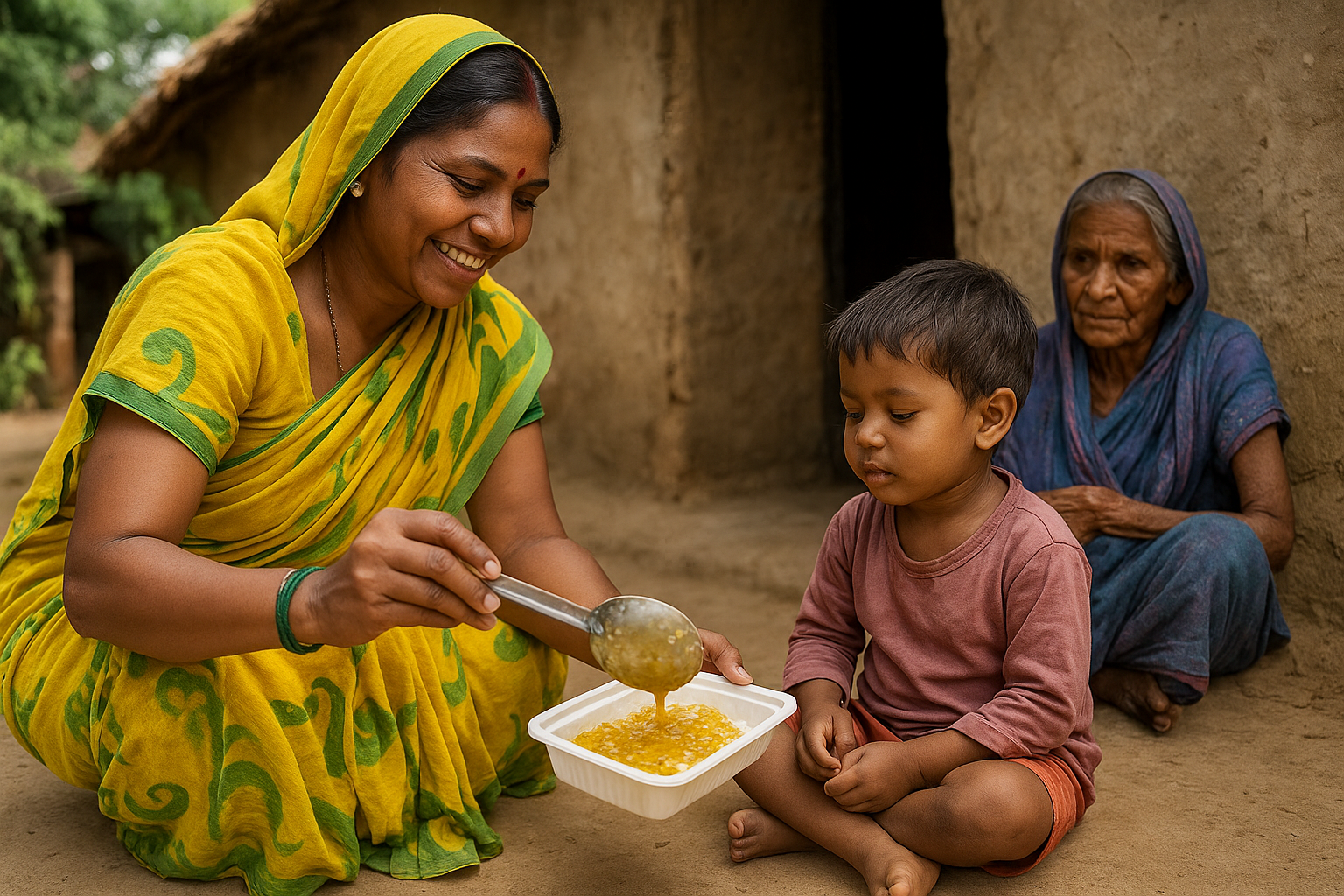
If you’ve ever visited a rural village, you’ve probably seen it — homes where elderly parents live alone because their children have moved away for work. Many of them are 70 or 80 years old, managing whatever little they have.
And when they fall sick? There’s no one to take them to a doctor, buy medicines, or simply ask if they’ve eaten.
This painful reality inspired Gramonnati Seva Pratishthan (GSP) to launch a heart-led nutrition program called Mayechi Shidori, a lifeline designed to support rural elders, mothers, and children with dignity, care, and nutritious food.
Let’s explore how this initiative is rewriting the story of rural nutrition.
What Is Mayechi Shidori?
Mayechi Shidori is more than a meal service — it’s a symbol of care, a mother’s love delivered in the form of safe, nutritious food.
It responds to the growing malnutrition challenges in rural areas where poverty, long distances, and lack of awareness make access to healthy meals difficult.
Malnutrition hits the most vulnerable first: infants, young children, pregnant women, lactating mothers, and abandoned elders. Without proper nutrition, their health spirals quickly, affecting entire communities.
This is exactly what Mayechi Shidori aims to change.
Understanding Malnutrition in Rural India
Malnutrition doesn’t happen overnight. It’s rooted in:
- Irregular food access
- Poor dietary diversity
- Limited nutrition awareness
- Unhealthy cooking and feeding practices
Children become underweight, mothers suffer from anemia, and many elders silently battle illness without support.
The impact is long-term — affecting immunity, learning ability, productivity, and even economic stability. In simple words, malnutrition slows down the growth of entire villages.
The Vision Behind Mayechi Shidori
Gramonnati Seva Pratishthan started Mayechi Shidori to ensure that no vulnerable person stays hungry or neglected.
The mission is clear:
Provide nutritious, hygienic, culturally familiar meals to rural families who need it the most.
The initiative focuses on:
- Children (0–6 years)
- Pregnant and lactating mothers
- Poor and abandoned elderly individuals
- Families facing food insecurity
It’s nutrition with empathy — the kind that fills stomachs and restores hope.
How Mayechi Shidori Works
Doorstep Delivery of Nutritious Food
Hot meals or ready-to-eat packs are delivered directly to homes.
The food is safely packaged, prepared fresh, and reaches people on time — especially important for elders living alone.
Nutrition-Rich Menu Planning
Meals include:
- Millets
- Seasonal vegetables
- Pulses, eggs, and other proteins
- Fresh fruits
Portions are customized for pregnant mothers, young children, or elders based on their needs.
Hygiene & Food Safety Standards
All meals come from clean community kitchens run by trained cooks.
Regular quality checks ensure the food is safe, nutritious, and handled with care.
Key Strategies Used to Fight Malnutrition
Nutrition Awareness Sessions
Mothers learn about breastfeeding, balanced diets, hygiene, and child feeding practices through fun, interactive sessions.
Growth Monitoring & Health Checkups
Team GSP tracks children’s height, weight, and development so that early signs of malnutrition don’t go unnoticed.
Community Participation
Local women’s groups, youth volunteers, and village leaders join hands to make this movement stronger and sustainable.
Special Care for High-Risk Groups
Severely malnourished children and food-insecure pregnant mothers receive extra support and follow-up care.
Impact of Mayechi Shidori on Rural Communities
The changes are visible — and heartwarming.
- Children show better growth and weight gain
- Underweight cases and anemia are reducing
- Mothers feel confident about feeding practices
- Elders receive dignity, warmth, and emotional support
It’s not just nutrition — it’s community healing.
Challenges & The Road Ahead
Like every rural initiative, Mayechi Shidori faces challenges:
- Limited funds
- Long-distance delivery
- Cultural resistance to new nutrition habits
But the team moves forward with plans to expand community kitchens, train more volunteers, and ensure every village child and elder receives proper nutrition.
Conclusion
Malnutrition may be a big problem — but with compassionate initiatives like Mayechi Shidori, change is not only possible, it’s already happening.
If you believe every child deserves a strong start and every elder deserves dignity, join hands with GSP.
Support. Volunteer. Partner.
Together, we can build a nourished and healthier rural India.