
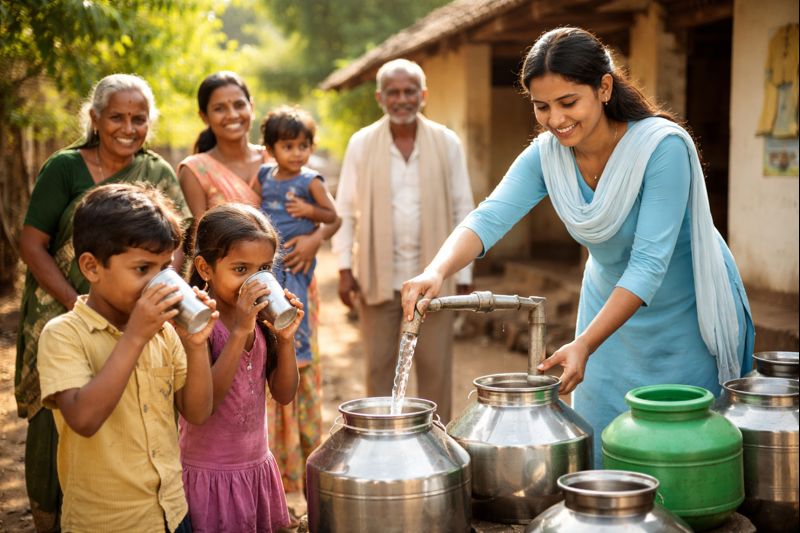
In villages, water is part of everyday life.
It is used for drinking, cooking, bathing, farming, and even caring for livestock. From early morning tea to the last meal of the day, everything depends on water.
But here’s the harsh truth—much of this water is unsafe.
Many rural families still rely on rivers, open wells, ponds, or tanker supply that looks clear but carries invisible dangers.
This is where Safe Drinking Water
becomes a game changer. When villages gain access to clean water, diseases reduce, healthcare costs drop, and families live healthier, happier lives.
What Is Safe Drinking Water?
Safe drinking water is not just water that looks clean.
It is water that is free from harmful bacteria, viruses, and chemicals.
Safe water is:
- Properly treated
- Free from contamination
- Fit for drinking without health risks
Here’s a simple example.
Water may look crystal clear, like a mountain stream in a movie scene—but it can still carry germs that cause diarrhoea or typhoid.
That’s why Safe Drinking Water always goes through treatment, not just visual inspection.
Common Waterborne Diseases in Villages
Unsafe water is one of the biggest reasons people fall sick in rural areas.
Some common water-related diseases include:
- Diarrhoea and dysentery, especially among children
- Cholera and typhoid, which spread rapidly during monsoons
- Hepatitis A and E, affecting the liver
- Skin and eye infections, caused by daily use of contaminated water
These illnesses may sound common, but their impact is serious—lost workdays, school dropouts, and repeated medical expenses.
How Unsafe Water Spreads Diseases
The problem often starts at the source.
Villages use untreated water from rivers, wells, or ponds, especially during water shortages.
The risk increases when:
- Water gets contaminated during collection
- Storage containers remain uncovered or dirty
- Hands touch water repeatedly while drawing it
Add open defecation and poor drainage to the mix, and water sources become breeding grounds for germs. Diseases then spread quietly, from one household to another.
Role of Safe Drinking Water in Disease Prevention
Safe Drinking Water breaks this dangerous cycle.
It stops germs before they enter the body.
When villages consume clean water:
- Children fall sick less often
- Pregnant women stay healthier
- Immunity improves across age groups
Think of safe water as a silent protector.
You don’t see it working—but you feel its impact in fewer hospital visits and stronger families.
Importance of Water Treatment Methods
Water treatment doesn’t have to be complicated.
Even simple methods can save lives.
Common and effective methods include:
- Filtration to remove physical impurities
- Chlorination to kill harmful bacteria
- Boiling, a traditional yet powerful solution
At the community level, water treatment plants and STPs ensure a steady supply of treated water.
At home, basic purifiers and safe practices make a huge difference.
Safe Water Storage and Handling Practices
Treatment alone is not enough.
How water is stored and handled matters just as much.
Good practices include:
- Using clean, covered containers
- Avoiding dipping hands directly into stored water
- Cleaning vessels regularly
It’s like cooking healthy food and then serving it in a dirty plate.
The effort goes waste unless hygiene follows through.
Community Participation in Ensuring Safe Water
Safe water systems last longer when communities own them.
Villagers play a key role in protecting water sources and maintaining systems.
Awareness programs help families understand:
- Why clean water matters
- How hygiene prevents illness
- What role each household plays
When communities work together, water solutions become sustainable—not temporary fixes.
Impact of Safe Drinking Water on Village Life
The benefits go far beyond health.
Villages with Safe Drinking Water experience:
- Lower medical expenses
- Better school attendance
- Higher productivity and income
Children miss fewer classes.
Adults lose fewer workdays.
Life becomes simpler, healthier, and more dignified.
Role of NGOs in Providing Safe Drinking Water
NGOs act as catalysts for change.
They bridge gaps where resources and awareness fall short.
Gramonnati Seva Pratishthan works closely with rural communities to:
- Develop community-based water solutions
- Promote hygiene awareness
- Encourage behaviour change at the grassroots level
By combining infrastructure with education, the organisation ensures that clean water leads to long-term health benefits.
Conclusion: Clean Water for a Healthier Future
The connection is clear—Safe Drinking Water prevents diseases before they start.
It protects children, empowers women, and strengthens entire villages.
Clean water is not a luxury. It is a basic right.
When communities, NGOs, and stakeholders come together, villages can move toward a future where preventable diseases become a thing of the past—and health flows as freely as water itself.