
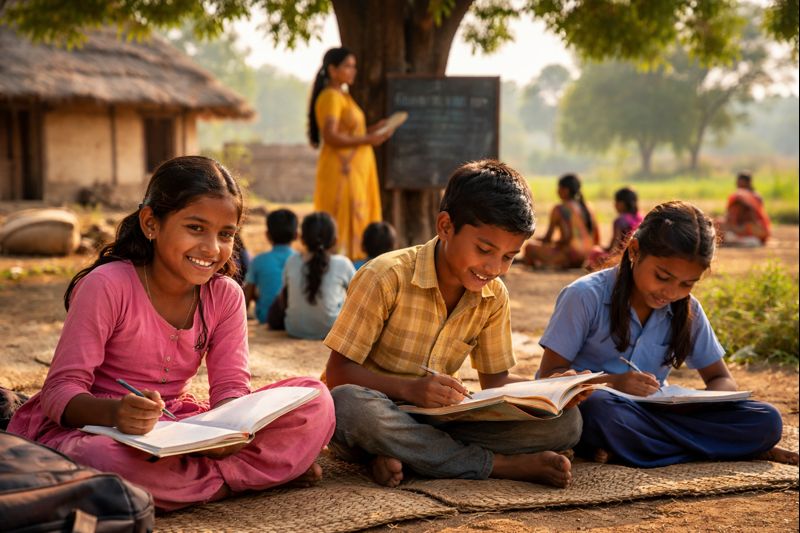
A Silent Revolution in India’s Villages
In the quiet lanes of rural India, a powerful transformation is unfolding. It doesn’t always make headlines, but its impact is deep and lasting. This change begins in small classrooms, under tin roofs or banyan trees, where children hold books instead of burdens.
Education is no longer just about reading and writing. It has become a tool of hope, dignity, and opportunity. Across villages, education transforming lives is not a slogan—it’s a lived reality.
The Reality of Life Before Access to Education
For generations, many rural families lived with limited choices. Children often followed the same path as their parents—farm labour, daily wage work, or early migration to cities.
School dropouts were common. Child labour felt “normal.” Education seemed like a luxury, not a necessity. When survival is the priority, long-term dreams quietly fade away.
Without awareness and access, education stayed out of reach for far too many.
Education as a Pathway Out of Poverty
The moment a child stays in school, something shifts. Education opens doors—to better jobs, stable incomes, and safer working conditions.
A young boy who once helped in the fields now dreams of becoming a teacher. A girl who might have migrated early now completes her schooling. This is how education transforming lives breaks the cycle of poverty.
When one family’s income improves, the entire household feels the change. Better food, better health, and a sense of security slowly follow.
Empowering Children with Knowledge and Confidence
Education does more than fill notebooks. It builds confidence. Rural children begin to ask questions, share ideas, and speak up.
You can see it in their eyes—the belief that “I can do more.” Communication skills improve. Critical thinking grows. Children start imagining futures beyond what they’ve seen around them.
Education shapes not just students, but informed citizens who understand their rights and responsibilities.
Transforming the Lives of Girls Through Education
When a girl goes to school, generations benefit. Education delays early marriage, improves health outcomes, and gives girls a voice.
An educated girl grows into a confident woman. She makes informed choices for herself and her family. She stands up, leads, and inspires others.
In many villages, educated women are now role models—teachers, health workers, entrepreneurs. This is education transforming lives at its most powerful.
Strengthening Families and Entire Communities
Education doesn’t stop at the classroom door. It enters homes and reshapes daily life.
Educated parents value hygiene, nutrition, and healthcare. They encourage their children to stay in school. Conversations change. Decisions improve.
Over time, entire communities grow stronger. Awareness replaces myths. Knowledge replaces fear. The ripple effect of education touches every generation.
Role of Schools, Teachers, and Community Support
None of this happens alone. Dedicated teachers, safe schools, and supportive communities make all the difference.
When parents, local leaders, and NGOs work together, children stay in school longer. Attendance improves. Learning becomes joyful, not forced.
Organizations like Gramonnati Seva Pratishthan play a crucial role by strengthening education at the grassroots—where it matters the most.
Skill Development and Preparing for the Future
Today’s education must go beyond textbooks. Life skills, vocational training, and digital awareness are essential.
Rural youth need skills that connect learning to livelihoods. Whether it’s computer basics, communication, or practical training, education must prepare them for a changing world.
This approach builds self-reliance and confidence—key ingredients for sustainable development.
Challenges That Still Remain
Despite progress, challenges persist. Many schools still lack proper infrastructure. Teacher shortages remain a concern. The digital divide widened learning gaps.
Sustained support, policy focus, and community involvement are crucial. Education transforming lives requires long-term commitment—not quick fixes.
Conclusion: Education as the Foundation of Rural Transformation
Education is not just changing individual lives—it’s rebuilding rural India from the ground up.
Every child in school is a step toward equality. Every educated girl is a future leader. Every informed family strengthens the nation.
At Gramonnati Seva Pratishthan, we believe that when education reaches the last mile, transformation follows naturally. Together, with awareness, action, and compassion, we can create a brighter, more empowered rural India—one child at a time.
Because when education truly reaches villages, lives don’t just improve—they transform.