
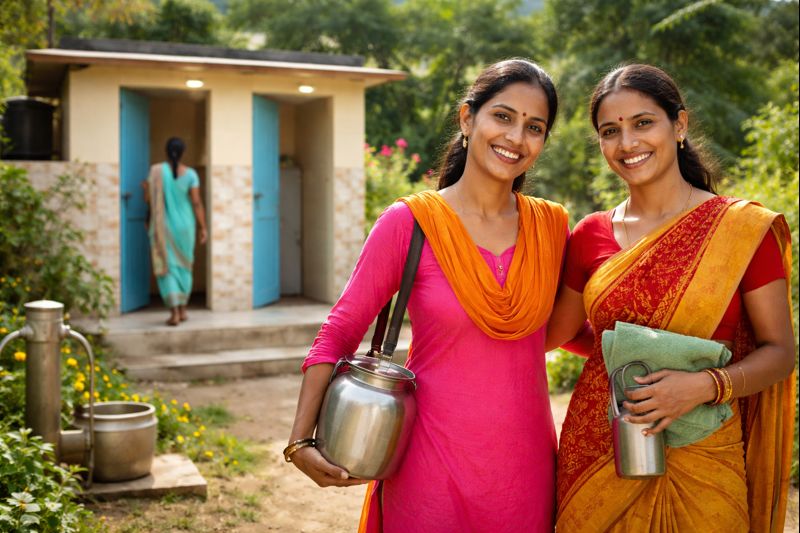
When we talk about sanitation, we often think of pipes, pits, and plumbing. But for women, sanitation is much more than that. It’s about health. It’s about safety. And most importantly, it’s about dignity.
Access to Clean Toilets is a basic human right. Yet, for millions of women and girls in rural India, this right is still out of reach. Something as simple as using the toilet can become stressful, risky, and humiliating.
A clean, safe toilet gives women freedom—freedom to live without fear, discomfort, or shame.
The Reality Women Face Without Clean Toilets
Imagine planning your day around sunrise or darkness—not for peace, but for privacy. This is the daily reality for many women without toilets at home.
Open defecation forces women to walk long distances, often in unsafe conditions. There is always a risk of harassment, snake or insect bites, and accidental falls.
It also disrupts daily life. Early mornings and late nights become stressful instead of restful. What should be a basic routine turns into a daily struggle.
Health Risks Caused by Unclean or Unsafe Toilets
Holding in urine for long hours is common among women without access to toilets. Unfortunately, this leads to urinary tract infections (UTIs), which can become severe if untreated.
Unclean toilets also increase the risk of reproductive tract infections (RTIs). Poor hygiene creates the perfect environment for germs to grow.
Add to this diarrheal diseases caused by contamination, and the health burden becomes even heavier. Over time, these issues can turn into chronic health problems that affect a woman’s quality of life.
Menstrual Hygiene and Sanitation
Menstruation should be normal—but without proper toilets, it becomes a monthly challenge.
Women need water, soap, privacy, and safe disposal options during their periods. Without these, maintaining hygiene becomes nearly impossible.
For adolescent girls, the lack of sanitation often means missing school during menstruation. For working women, it leads to reduced productivity. Clean sanitation facilities help women manage their periods with confidence and comfort.
Clean Toilets and Women’s Dignity
Dignity begins with privacy. A clean toilet offers women a personal space where they don’t feel rushed, watched, or judged.
It supports emotional well-being and self-respect. Women no longer have to hide, wait, or feel embarrassed about a natural bodily need.
Freedom from fear and shame might sound small—but for many women, it changes everything.
Impact on Girls’ Education
School toilets—or the lack of them—play a huge role in girls’ education.
When schools don’t have separate, clean toilets for girls, attendance drops, especially after puberty. Many girls simply stop coming to school.
Providing proper sanitation helps girls stay in school longer. Educated girls grow into healthier women, better decision-makers, and stronger contributors to their communities.
The Role of NGOs in Improving Sanitation for Women
This is where organizations like Gramonnati Seva Pratishthan step in.
NGOs work closely with communities to build and maintain toilets that people actually use. They don’t just construct structures—they create awareness.
Hygiene education, behavior change programs, and involving women in planning make sanitation solutions sustainable and effective.
Government Initiatives and Community Participation
Government sanitation schemes have laid an important foundation. But real change happens when communities take ownership.
When local leaders, women’s groups, NGOs, and village bodies work together, toilets stay clean and functional.
Sanitation isn’t just about building toilets—it’s about maintaining them with pride and responsibility.
How Clean Toilets Improve Overall Community Health
The benefits don’t stop with women.
Clean sanitation reduces the spread of diseases across the entire village. Surroundings stay cleaner. Water sources remain safer.
Healthier women mean healthier families. And healthier families build stronger communities.
Conclusion: Sanitation Is Dignity
Access to Clean Toilets protects women’s health, preserves their dignity, and gives them confidence in their daily lives.
Sanitation is not a favor. It is not a luxury. It is a right.
By supporting sanitation initiatives, spreading awareness, and encouraging community participation, we can create villages where women live healthier, safer, and more dignified lives.
Because when women thrive, communities rise—and sanitation is where that journey begins.